
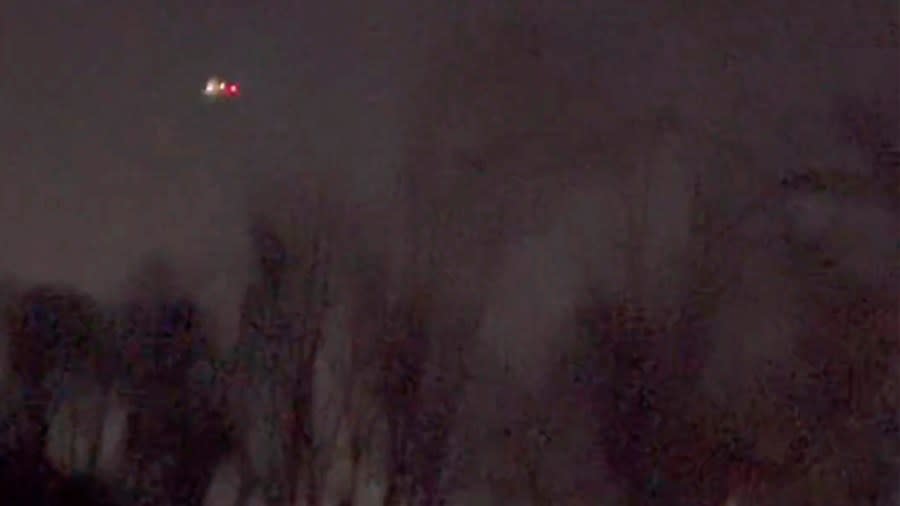

Recent reports of “drones” hovering and flying over the United States have taken the country by storm. These aircraft have yet to be officially identified both in the nature of their operation (manned or unmanned) and who is responsible for them. While all of that is being sorted out, a widespread hysteria has taken root among the larger whole of population, with alleged “sightings” growing in frequency and volume.
As a drone professional with nearly 8 years of experience in the industry, I have seen a wide array of aircraft — of both the manned and unmanned varieties. Based upon that experience and knowledge, I am here to tell you that the most likely explanation of a large percentage of these sightings is a case of mistaken identity — i.e. manned aircraft being mistaken for drones. In fact, as we learn more about these “drone sightings,” it is becoming increasingly more clear that a majority of them are manned aircraft and not drones as is being reported by many media outlets and eyewitness accounts.
That’s not what this article is about though. This article is instead for folks who are looking for answers to some common questions I get about drone laws and uses as well as how they can properly protect themselves against potential bad actors who may deploy drones for inappropriate and illegal purposes. After reading this piece, you will come away with a newfound understanding of the legality of drone operations; how you can best handle drones when they fly past you, your family, or your property (legally); and hopefully an appreciation for the technology as a whole.
A Few Things You Should Know About Drones

Drones are fascinating little machines capable of a number of different tasks and applications. That said, they are not completely unbridled in their abilities to navigate national airspace. Quite the contrary. Drones and their use are regulated in the United States by the Federal Aviation Administration (FAA), the same entity responsible for manned aviation via planes, helicopters, paramotors, and more.
Despite popular belief, there are qualifications one must meet before actually putting a drone in the air (with some exceptions for smaller drones). What certification and licensing a pilot needs to operate a drone depends wholly on their intended use of their drone. I will refrain from getting too far into the weeds on what it takes to become a particular type of drone pilot, but here is a rough outline for those of you that just want a surface understanding:

Along with that information, there are rules and regulations under which all drones must operate. While there are slight variations in and minor exceptions to the rules depending upon the pilot’s certification and licensing level, here are the baselines of which you should be aware:
- Drones must not exceed 400 feet above ground level (AGL) relative to their launch point.
- Drones must always be flown within visual line of sight (VLOS).
- Drones should avoid entering the airspace around an active emergency area and shall not interfere with emergency response efforts.
- Drones may enter controlled airspace with prior permission from the FAA via the FAA DroneZone or the Low Altitude Authorization and Notification Capability (LAANC) system.
- Drones may not enter restricted airspace or military airspace without prior permission from the FAA or respective military branch.
- Drones must always give right-of-way to manned aircraft when entering similar airspace.
- Drones may not fly over people unless they meet FAA standards for OOP.
- Drones may cross over active motor ways as long as they do not sustain flight (hover) over them for significant periods of time unless they meet FAA standards for OOMV.
While I am sure there are other factoids about legal drone use that I may have left out, those are (in my mind) the most important of them all. Knowing what drones can and cannot do while in-flight is crucial to ascertaining whether or not the nature of their flight is kosher, responsible, and benign. While not fool-proof, flights adhering to these rules and regulations are typically not something about which you should worry too much.
If a drone does seem to be breaking any rules or regulations for safe and responsible flight, contact the FAA immediately and document what infractions you can for their reference. There will be more information further down this article to help you know how and what to document.
Keeping all of the things you potentially just learned about how drones are allowed and not allowed to be operated, let’s jump into some frequently asked questions about drones in light of the recent alleged “sightings” in New Jersey and many other spots throughout the contiguous United States…
Q: How can I tell the difference between a drone and another aircraft?

This is a fantastic question because while it may seem like a simple problem to solve via the naked eye, over the last few weeks we have learned that it’s really not that simple. Still, there are methods for determining whether the aircraft flying nearby is a manned or unmanned aircraft. Considering in much of the country manned aviation is more common than unmanned, let’s talk about how you determine if what you are looking at is a manned aircraft.
I recommend downloading two applications to your mobile device called FlightAware and Flight Radar 24. These applications are designed to allow anyone to identify aircraft in the sky. Not just the type of aircraft, but also the make, model, and flight data such as airspeed, altitude, company affiliation, origination, and destination. This data is gathered by scanning the aircraft’s Automatic Dependent Surveillance-Broadcast (ADS-B) which is a type of frequency that manned aircraft transmit during flight (via FlightAware) and utilizing radar data from radar systems across the country (Flight Radar 24).
Where FlightAware and other similar scanning solutions fall short is in their inability to identify and track flights that do NOT broadcast ADS-B. Not every aircraft or flight is required to have ADS-B transmitting information while airborne — I won’t get too far into the weeds with this as it isn’t crucial for everyone to understand when ADS-B is or is not required for flight, but know that this is one hole in the use of these types of flight tracking applications and equipment.
Flight Radar 24 falls short is in the potential lack of data from smaller radar systems it does not pull from and having some features hidden behind a paywall.
While the methods above combined with observation via the naked or aided eye are not always fool-proof in determining what kind of aircraft is overhead, it is important to do your best to narrow down the possibilities and use logic and reason to determine the most likely scenario.
Q: If a drone is flying near me, how can I keep track of it and know who is flying it?

One of the first things people want to know when they see a drone flying nearby is where the pilot is and, more specifically, the identity of the drone pilot. That’s completely natural, accountability is something human beings tend to gravitate towards from both a proactive (who is to credit) and a reactive (who is to blame) perspective.
In 2021, the Federal Aviation Administration introduced Remote ID for drones. Remote ID is a sort of digital “license plate” that is required to be broadcast by drones while they are in flight. The information broadcast via Remote ID includes the information about the drone itself (make, model, location, etc.) and the pilot (name and current location relative to flight).
As of the writing of this article, anyone can gain access to these Remote ID transmissions by downloading apps such as Drone Scanner. The Drone Scanner is unique to identifying and tracking drones in your surrounding airspace by scanning for these Remote ID broadcasts. Not only will you receive information about the drones around you, you will also be able to see their location in real-time, which is great for keeping tabs on drones of which you may be suspicious.
While apps like Drone Scanner do give you access to the pilot’s location during their drone flight, be aware that not all pilots wish to be approached while they are flying. Always air on the side of caution and avoid confrontations with pilots and please be considerate if you wish to approach the pilot in a genuinely curious manner.
If you want my advice, just take note of the pilot’s identity and the location from which they are flying. If it becomes repetitive and their flying is disruptive or even suspicious, avoid direct confrontations with the pilot and instead call law enforcement. Drone pilots will feel less threatened being approached by an official law enforcement officer than a potential stranger with unknown intentions and, while law enforcement does not have jurisdiction over what a drone does while airborne, can at least address any issues while keeping things deescalated (for the most part).
Q: Can the police do anything to stop a drone pilot from flying their drone?

This one is tricky, but there are some clear boundaries within which police may exercise jurisdiction over drone operations. That said, I want to be completely clear when I say that the only entity in the United States that has jurisdiction over the way a drone navigates and operates within the national airspace is the FAA. Meaning if the drone is airborne nobody other than a representative from the Federal Aviation Administration or its established operating standards may manage, dictate, or otherwise regulate said drone. It is an aircraft flying in the national airspace, therefore it is exclusively the responsibility of the FAA to oversee.
That said, there are some loopholes to that language that allow police, government employees, and private property owners the ability to exercise certain jurisdiction over a drone pilot:
- Properties that are protected or privately managed may exercise the authority to deny a drone pilot the ability to launch, operate, or land their drone from said property.
- Police at the local and state level as well as a variety of other law enforcement agencies not directly affiliated with the FAA are allowed to request proof of certification and licensing from drone pilots to ensure they are operating safely and responsibly and are credentialed to operate their drones in the manner observed.
- Law enforcement agencies may also file reports with the FAA should they observe the operation of a drone outside of mandated regulation. Police can be more effective when it comes to reporting drone operations to the FAA as they are accustomed to filling out reports detailing unlawful behaviors and events and are generally trusted as more reliable sources of information than a private citizen acting as an eyewitness.
- In extreme cases where a police or other law enforcement officer reasonably believes that a drone poses a credible threat to a person, persons, or even a protected species or property, they may be entitled to enforce reckless endangerment statutes and bring the drone down through lawful orders given to the drone pilot or potentially kinetic force.
By and large though, police will not have the power to demand a drone is landed or to bring it down by force. If there is unlawful behavior, police officers will likely talk with the drone pilot and request they bring the drone down. If the pilot refuses to land the drone, responding officers will likely gather the information they can and file a report with the FAA. This can be frustrating knowing that your local and state law enforcement agencies are not completely empowered to handle all drone-related issues, but the bureaucratic tape that segments our government agencies and the respective jurisdictions will not allow police at any level to dictate what happens in the national airspace — that is solely the responsibility and jurisdiction of the FAA…unless you’re on a military base or facility, but that’s a different topic for a different article. Let’s continue.
Q: Can I shoot drones down if I feel threatened?

No. You cannot legally take matters into your own hands and shoot down a drone. Here’s why…
Drones as well as all manned aircraft are protected under 18 U.S. Code § 32, also known as the Aircraft Sabotage Act, which is a federal law that prohibits the destruction of aircraft or aircraft facilities. It also makes it illegal to:
- Commit violence against a person on an aircraft.
- Disable or interfere with the authorized operation of an aircraft.
- Communicate false information to, from, or about an aircraft.
- Attempt or conspire to violate any of the above.
Penalties for violating 18 U.S.C. 32 can include fines, lengthy imprisonment, and in the event somebody is seriously injured or killed, life in prison, or even the death penalty. The law was added to the United States Code on July 14, 1956, and has been amended several times, including by the Anti-Terrorism and Effective Death Penalty Act of 1996.
This one does not require any further expounding. It is written in black-and-white that attempting to destroy or disable any aircraft is a felony offense punishable by the fullest extent of the law. Do not take matters into your own hands, it’s not worth the headache you will have created for yourself in the process.
Q: What do I do if I think a drone is spying on me?

It is not an unreasonable idea that some malicious actor may utilize a drone to conduct illegal or otherwise unethical surveillance on somebody. When we look at empirical data, the number of instances a drone has been used to conduct unlawful surveillance on a person or property is staggeringly low compared to the paranoia the idea itself perpetuates. Still, “low” does not mean “zero,” so what do we do in the event somebody is using a drone to do something illegal against us, our families, or our property?
- Document the drone’s flight patterns and habits. While there is a law prohibiting attempting to or succeeding in disabling or destroying an aircraft, there is absolutely no law against recording it while in flight. If you notice an aircraft acting suspiciously around your property and believe it could be illegally surveilling you or your family, document the aircraft while it is flying and establish a pattern of behavior. Establishing this pattern helps to build a case against the operator of the aircraft, especially if the behavior toes the line of harassment or illegal surveillance of a private citizen. Not only should you record photo and video evidence of the aircraft, but you should also keep a log of the dates and times the aircraft flies around your property.
- Go inside when a drone loiters overhead for too long. This solution probably won’t sit well with most people initially, but if you really believe you have a problematic drone on your hands, the best thing you can do is shelter yourself and your family from its potentially prying eyes. Yes, it is annoying that you have to confine yourself to your home while the drone is airborne, but it will shield you and yours as well as act as a disincentive to the drone operator should they truly have mal-intent.
- Call local law enforcement. Referring to a previous section, your local law enforcement officers will not have the ability to address all matters relating to the operation of an aircraft, but they will have the ability to address certain behaviors exhibited by the aircraft (i.e. if it is used to harass or surveil a private citizen, as a weapon to inflict harm upon people or property, etc.). Even if they cannot take immediate action under their own jurisdiction, law enforcement will have the resources to move the issue further up the chain faster — looping-in agencies like the Federal Aviation Administration (FAA), Federal Bureau of Investigation (FBI), and whoever else may need to be involved.
- Contact the Federal Aviation Administration via a Regional Flight Standards District Office (FSDO). After contacting local law enforcement to report the initial contact with the drone and getting it on-record, reach out to the FSDO that oversees your area. This can be referenced with a simple Google search of the phrase “FSDO [insert your town/city here].” Be sure to include all of the details related to the drone’s flight in your report to the FSDO, especially photos and videos of the drone operating outside of FAA regulations and being used unlawfully for surveillance or other malicious intent.
Let’s wrap things up and pop a holiday bow on them…

I know that the idea of drones having the freedom to navigate the airspace over your community may be concerning, but I challenge you to think about how many airplanes, helicopters, paramotors, and more do the same each and every day. While those aircraft may not have the ability to gain the same access to your property as a drone, the opportunities for misuse of those aircraft overlap quite a bit…and yet we sleep soundly knowing that dozens, if not hundreds, of aircraft pass over our homes and communities all the time.
While I am keen to always keep an open mind, I can say, beyond a shadow of a reasonable doubt, the drone sightings you see all over your social media feeds and being reported on nearly every news outlet are overblown hysteria overall. Are there some sightings of actual drones? Absolutely, I’ll be the first to tell you, a lot of people are seeing drones hovering in the night sky. But is it because there is some kind of cabal of evil infiltrating the United States? Probably not.
No, my friends, I believe what we are experiencing is a nationwide case of Baader-Meinhof phenomenon or “frequency illusion.” This is best defined as a cognitive bias that one experiences when being exposed to something for the very first time and then noticing it constantly after the first exposure. Many people walk around during the day and night, but what I am learning from this nationwide drone hysteria is that very few of those people ever bothered to look up at the sky above them! It’s filled with satellites, aircraft, stars, and planets, all of which could be confused with a drone to the untrained eye.
Do not fall victim to frequency illusion and the fanning of the flames by news outlets and your neighbor’s social media posts…instead, go outside and start looking to the sky. You will be amazed at how far we have come if you just take the time to notice.
—
If you enjoyed this article and the content I create, please consider supporting me by clicking the button below! Every little bit helps me to grow The Drone Geek and create engaging and informative content for you to enjoy.
The option to contribute is totally voluntary and I will NEVER block out anyone who views my content with a paywall. If you cannot contribute monetarily, you can support me in other ways! Please share this article as well as any of my other content pieces on my social media platforms. Consider subscribing to my blog and YouTube channel as well as following me and liking me on Instagram, Twitter, and Facebook.